
How CEI Materials Helped Shape The Bridge District in Washington, D.C.
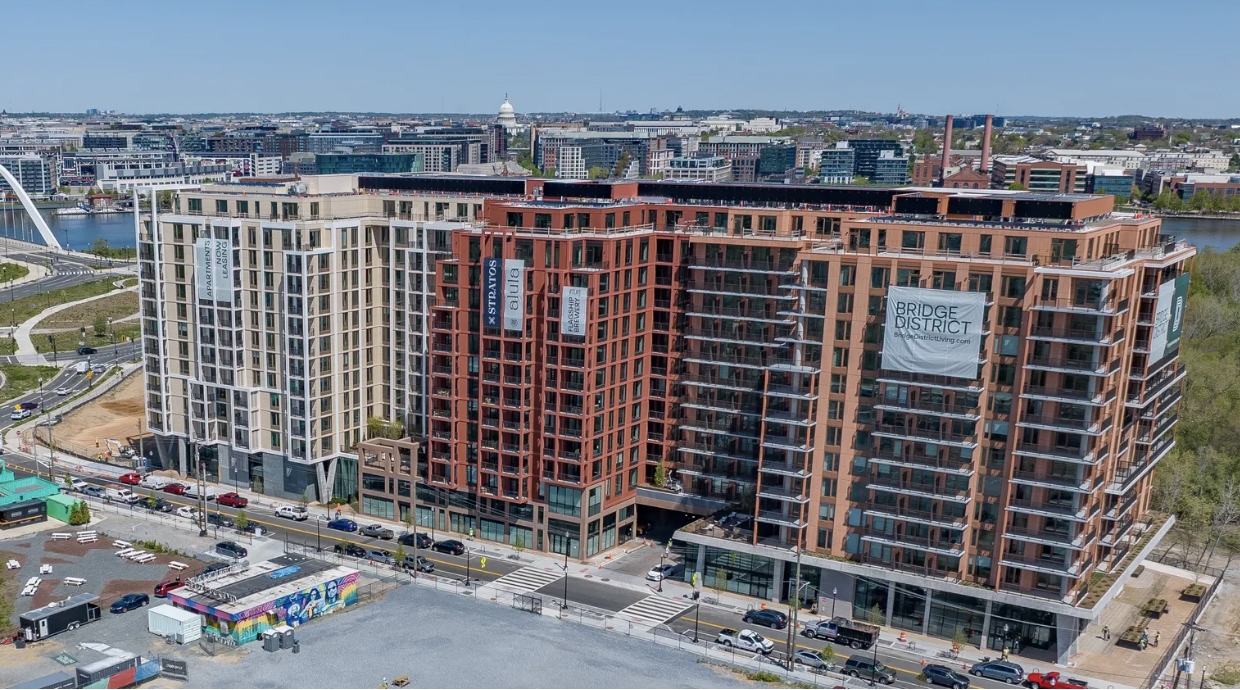
The Bridge District in Washington, D.C., is more than a major new development—it is a large-scale investment in housing, connectivity, and the future of the built environment along the Anacostia waterfront. Led by Redbrick LMD, designed by ZGF, and built by HITT, phase one brings together the three towers known as Stratos, Poplar House, and Alula, along with community-serving retail and public-facing space designed to strengthen connections between Southeast D.C. neighborhoods and downtown. ZGF describes the project as a model for responsible development that supports community connection, healthy living, and climate-conscious design.
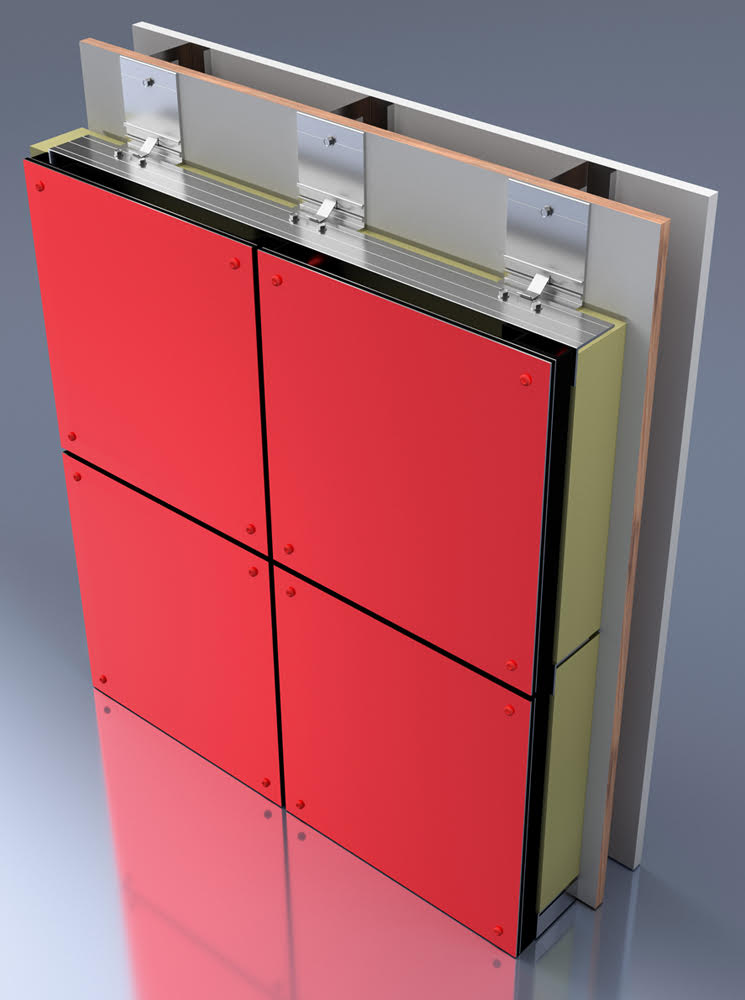
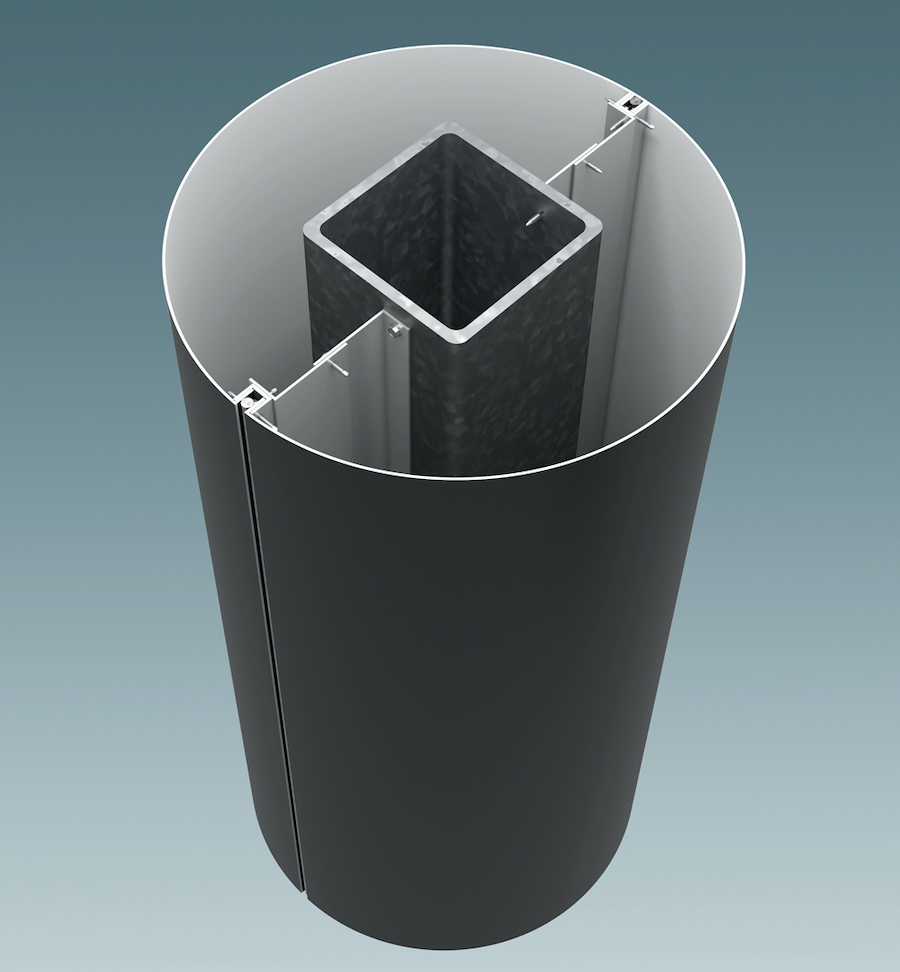
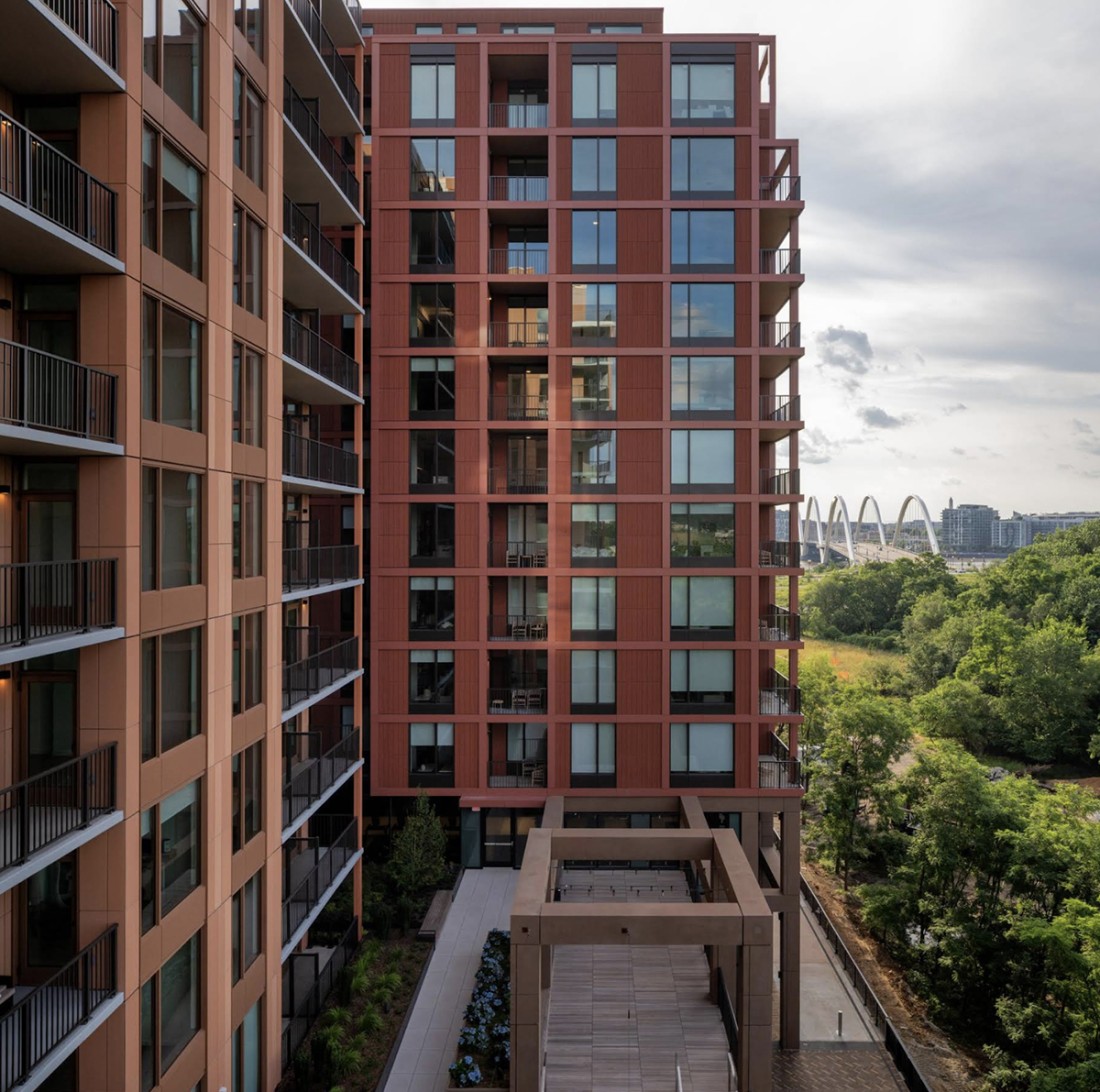
For CEI Materials, The Bridge District represented the kind of project where design ambition, fabrication precision, and field coordination all had to work together from the start. CEI fabricated 78,000 sqft of post-painted 1/8" plate in finishes Sienna Clay, Georgian Brick, Hidden Valley, Everlast, and Bright White. The scope also included 2,100 sqft of ALUCOBOND 4mm PLUS MCM in Custom Celestial Black. Utilizing the R4000 system, CEI delivered a façade package that matched the project’s scale, visibility, and complexity. Completed with PCC Construction Components, Inc. in 2025, the project required close coordination across fabrication, painting, and delivery to maintain momentum on a demanding urban schedule.
Why the Project Mattered from the Start
From the earliest conversations, The Bridge District stood out as a strong fit for CEI. According to Barbara J Architectural Sales, working with the architect and developer to help shift the project toward plate panels for the full scope instead of a partial MCM approach worked in CEI’s favor. That decision aligned the project with CEI’s strengths in precision fabrication and helped position the team to support the design intent at a larger scale.
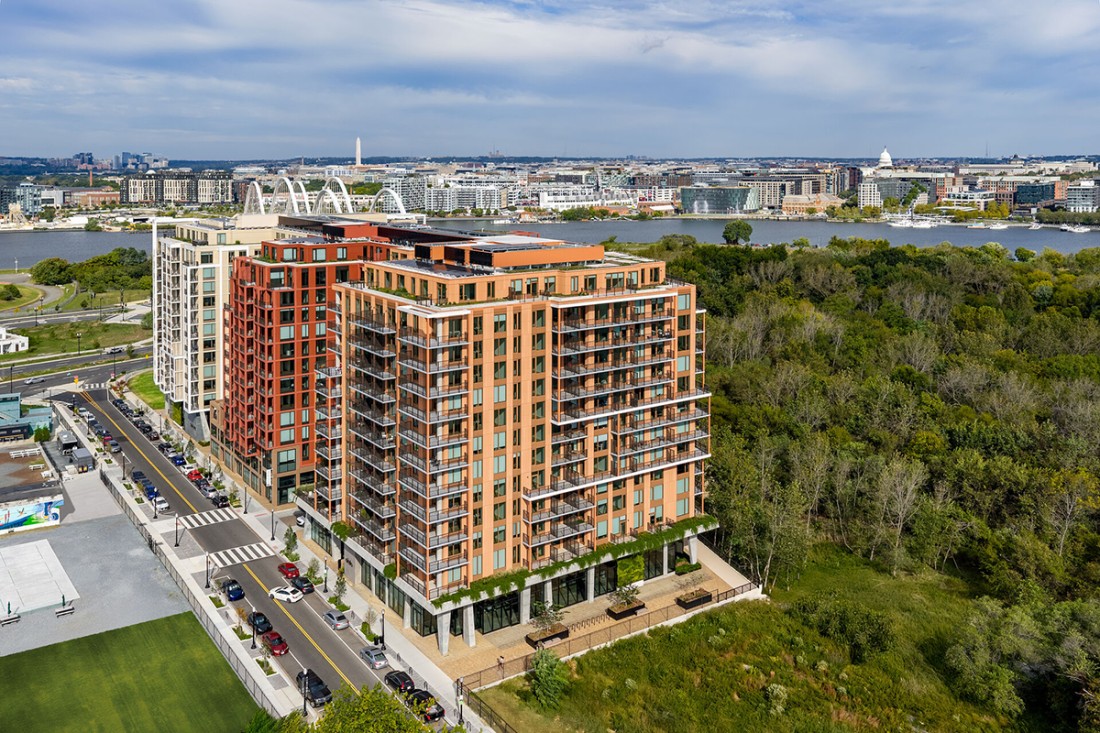 Barbara J Architectural Sales also played a key role in helping secure the project. As they explained, their work with ZGF Architects on the main façade helped lead into the broader metal panel scope, while their local business certification supported project requirements that CEI’s products could help fulfill. Just as importantly, CEI and BJAS worked together on pricing strategy to keep the package competitive in a challenging D.C. market.
That preconstruction effort mattered. Budget pressure and pricing competition were major hurdles, and Barbara J noted that close coordination between CEI, BJAS, and the installer PCC helped ensure the team was exactly where it needed to be to win the work. The result was not just a successful award, but the start of a collaborative process that carried through fabrication and installation.
A High-Performance Project with Long-Term Impact
The Bridge District is notable not only for its scale, but for the vision behind it. According to ZGF, the project is on track to become the largest ILFI Zero Carbon multifamily residential building in the world and is pursuing LEED v4.0 Platinum certification. The development is all-electric, powered by renewable energy from rooftop solar and off-site sources, and designed to support long-term performance at an ambitious urban scale.
The project also carries substantial presence in the D.C. market. Barbara J Architectural Sales described it as one of the largest CEI projects in the area, involving a prominent developer, national architect, contractor, and installer. Its location across the river from the baseball and soccer stadiums and along a major highway gives the project daily visibility to thousands of people—making it a meaningful addition to CEI’s growing presence in the region.
Customization at a Massive Scale
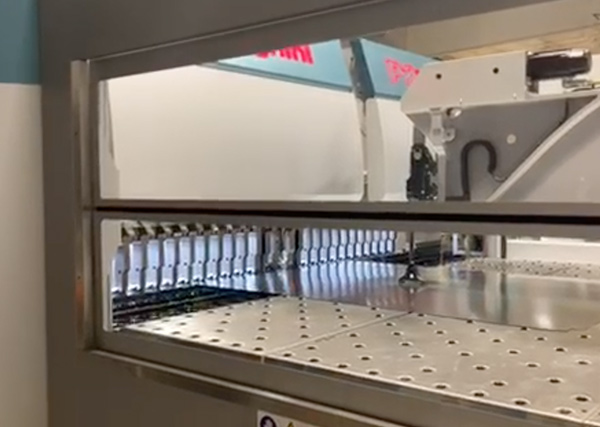
From CEI’s perspective, one of the defining aspects of the project was the level of customization involved. As Kyle Dauer, Senior Project Manager at CEI Materials, put it, this project was “as custom as it gets.” Between the varying attachment angles, hot welding, multiple returns and profiles, and the range of colors involved, it felt as though nearly all 6,000 panels had their own unique requirements.
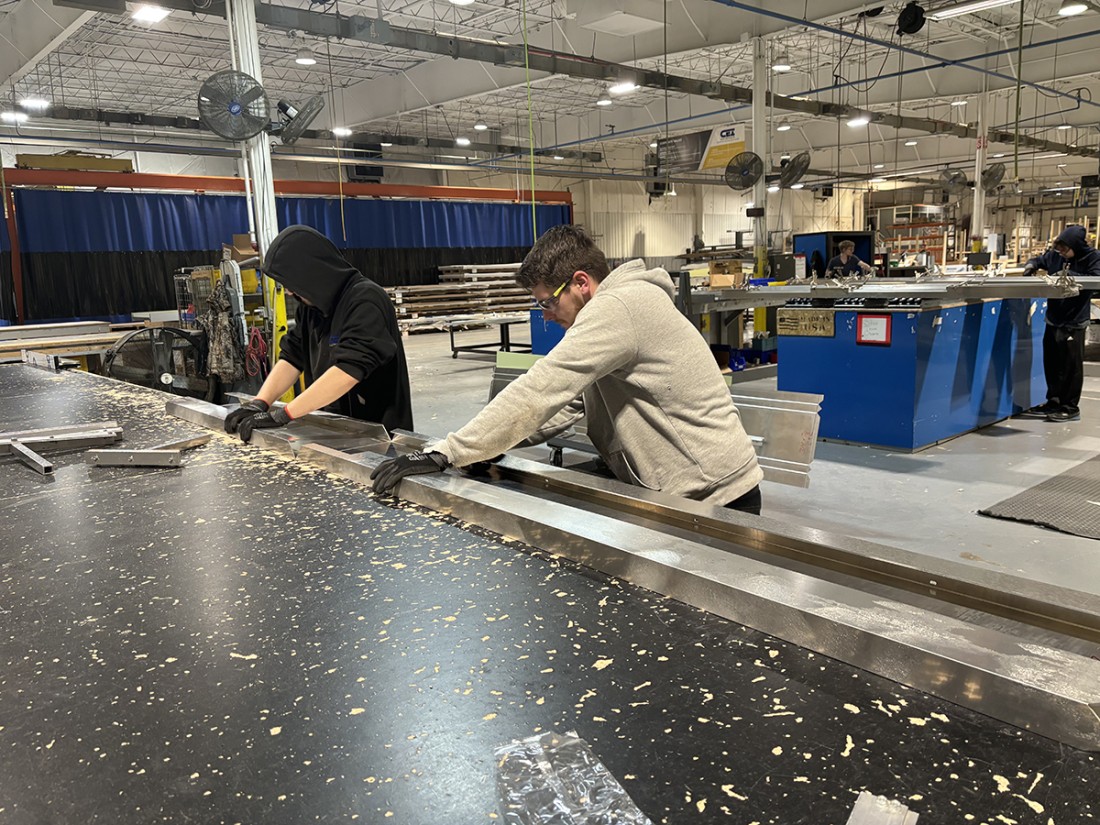 Kyle also highlighted the scheduling challenge behind the scenes. Panels had to be delivered to the site every 1.5 to 2 weeks, while each shipment required approximately three weeks of painting due to the size and complexity of the work. That created a substantial coordination effort, with overlapping production, painting, and delivery taking place across multiple facilities. On a project this visible and this schedule-driven, maintaining that rhythm was just as important as fabricating the panels themselves.
Precision That Showed Up in the Field
That effort was evident on site. In CEI’s original project notes, Tom Baran, Senior Project Manager at PCC, described The Bridge District as a large and demanding project that required a fabricator sophisticated enough to execute the design, schedule, and scope—and said CEI proved to be that partner.
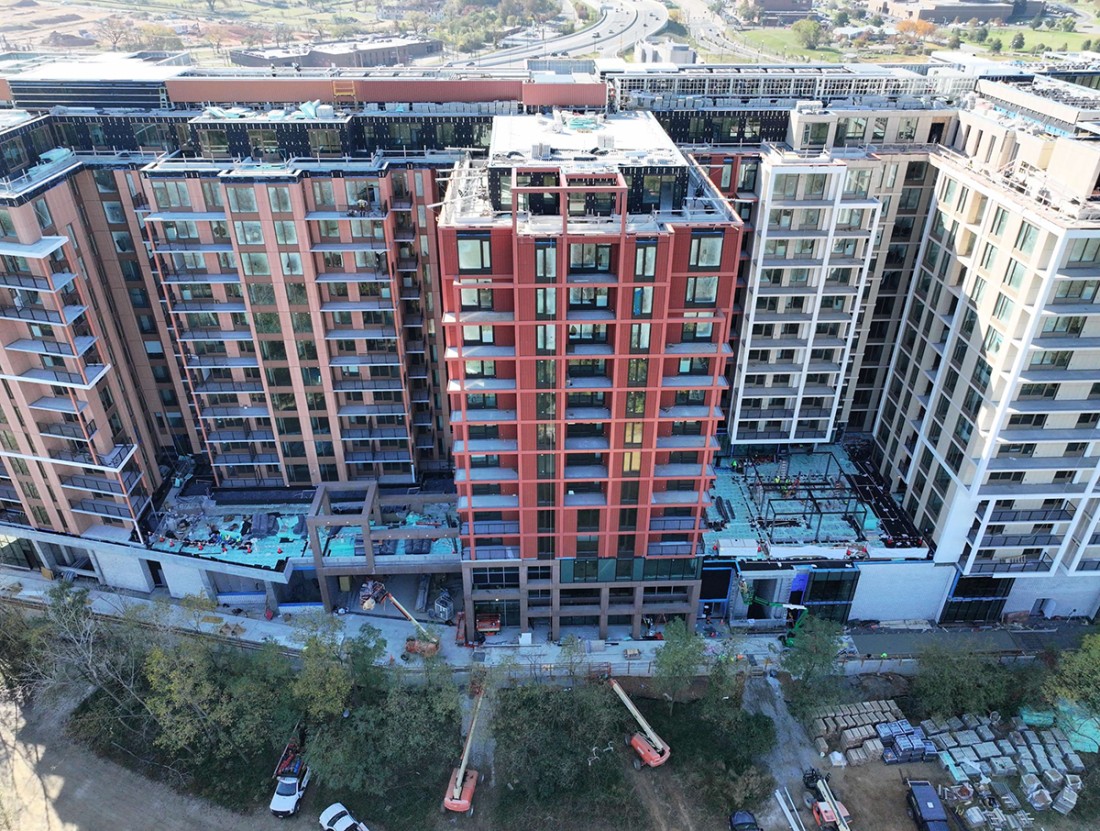 Tom also emphasized the complexity of the façade sequencing, particularly across multiple color schemes and transition zones. In his assessment, CEI handled the color transitions and sequencing exceptionally well. He further pointed to the overall quality of fabrication, noting that fit-up was consistent across elevations and required minimal field adjustment.
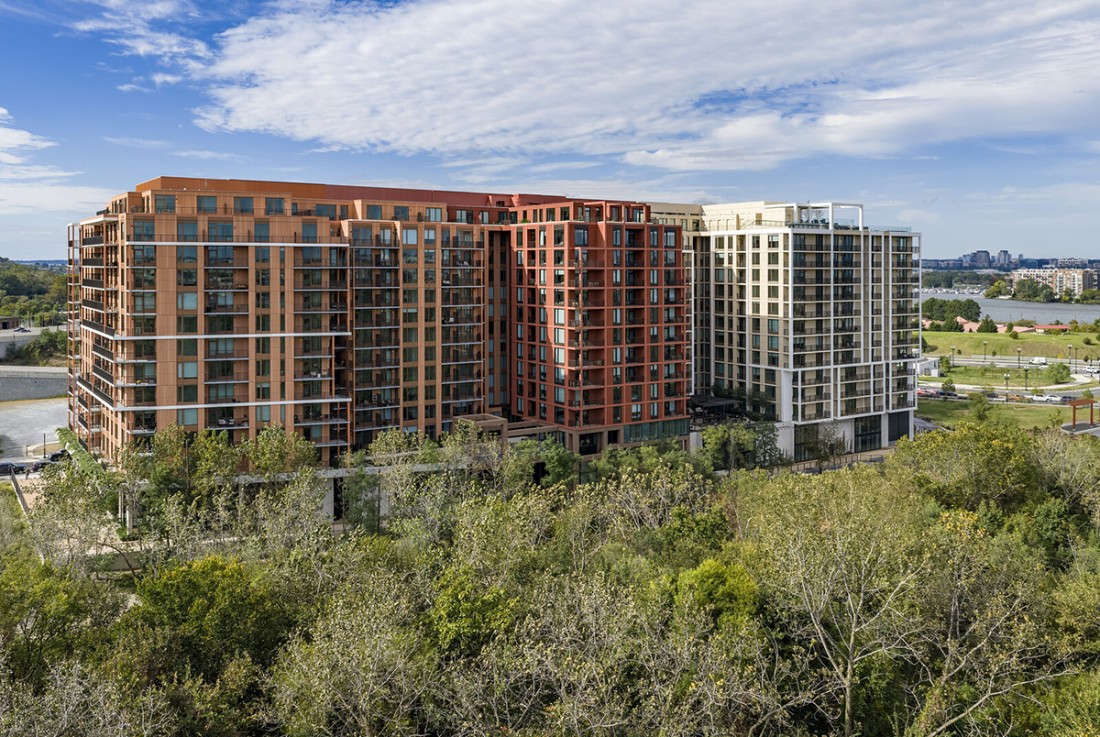 That kind of feedback reinforces what made this project successful: strong partnerships, proactive communication, and a shared commitment to getting the details right. Tom’s perspective from the field aligned closely with CEI’s internal experience—this was not a standard façade package, but a highly managed process requiring precision from preconstruction through delivery.
Project Recognition
The significance of The Bridge District has also been recognized at the industry level. ENR named Stratos, Poplar House, and Alula a 2025 East Project of the Year Finalist and Best Residential/Hospitality project, underscoring the development’s prominence and the exceptional execution behind it. For CEI Materials, contributing to a project honored in this way reflects the level of precision, coordination, and craftsmanship required across the full team.
 What This Project Says About CEI Materials
For CEI Materials, The Bridge District is more than another completed project. It is an example of what happens when advanced fabrication, close coordination, and ambitious design goals come together on a highly visible urban development. From strategic preconstruction collaboration to technical project leadership, to field validation, the project reflects the kind of teamwork required to deliver a façade scope of this scale and complexity.
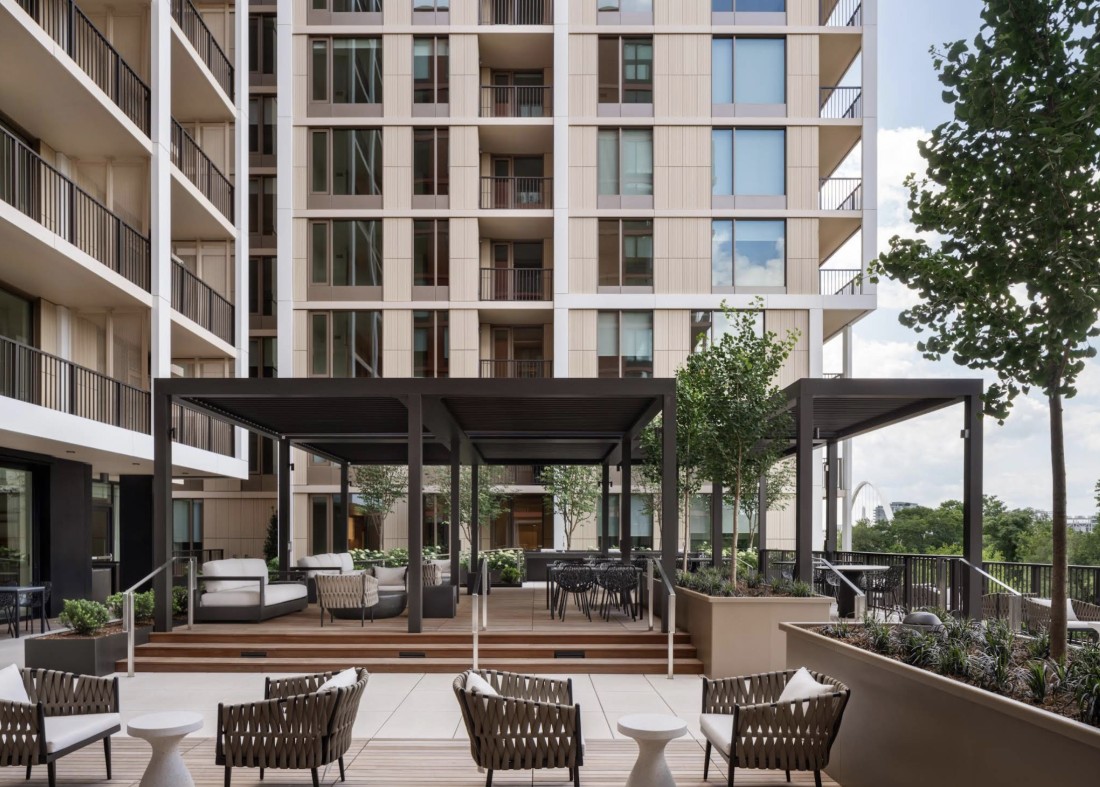 From the outside, the final result reads as clean, bold, and cohesive. Behind that finished appearance was a highly technical process involving custom profiles, multiple finishes, demanding sequencing, and close coordination between CEI, the installer, and the broader project team. That is the kind of work CEI is proud to stand behind.
As major developments continue to demand stronger performance, tighter schedules, and more refined design execution, projects like The Bridge District reflect the kind of work CEI is built to support—technically demanding, highly customized, and delivered through collaboration from start to finish.
Photos © ZGF, HITT, Hover Solutions, CEI Materials

.png)