

Architectural Metal Cladding Systems
CEI Materials fabricates architectural metal cladding systems for commercial, institutional, retail, multifamily, and specialty faade applications across the United States. Through its systems platform and design assist services, CEI helps project teams select assemblies that align with performance goals, constructability requirements, code considerations, and design intent. Whether a project calls for a pressure-equalized rainscreen, a drained rear-ventilated assembly, a route-and-return silicone joint system, or a modular cassette panel solution, CEI provides engineered options built for reliable installation and long-term building-envelope performance.
What separates CEI from generic cladding suppliers is the combination of system knowledge, fabrication precision, and project support. CEI works with design teams on faade selection, detailing, code compliance, cost efficiency, material availability, and total wall assembly coordination. The company also supports projects with 3D laser scanning, BIM integration, and design coordination, helping reduce field conflicts and improve fit when panels arrive on site. For commercial visitors, this page should repeatedly guide traffic toward a rep contact or bid request instead of reading like general educational content.
CEI Cladding System Options
R3000 Series -- Pressure Equalized Rainscreen
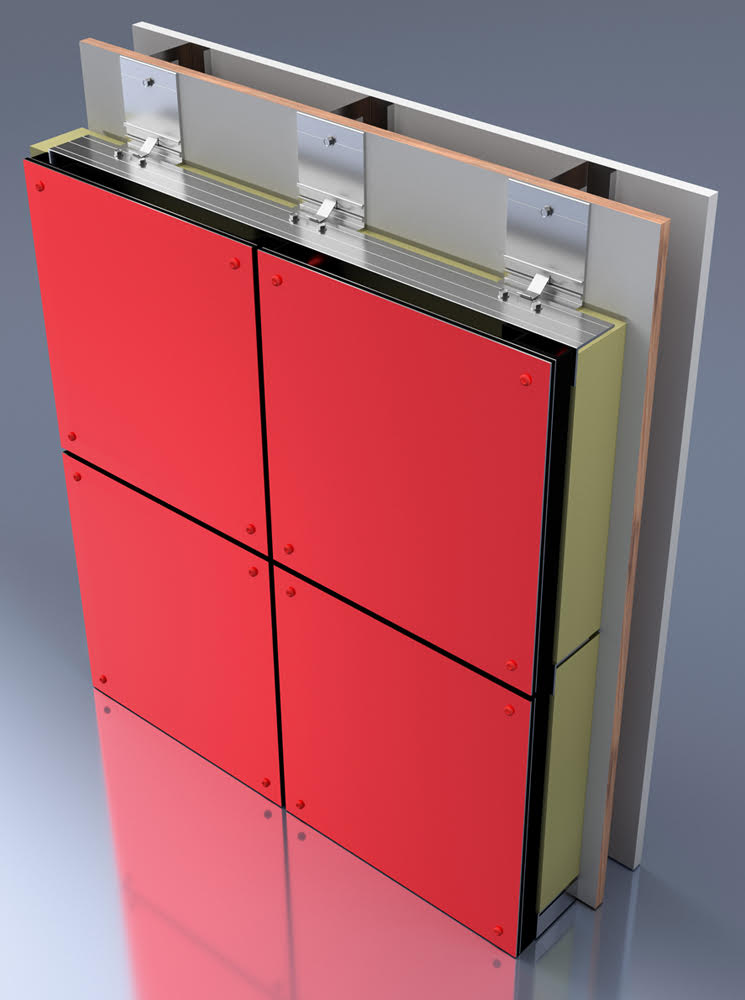
The R3000 Series is CEI's high-performance pressure-equalized rainscreen system. It is designed to manage water by balancing air pressure within a compartmentalized panel assembly, helping limit moisture intrusion at the faade. This system supports both MCM and aluminum plate applications and is a strong fit for projects where weather management, faade performance, and long-term durability are priorities.
- Joint widths: 1/2 inch and 3/4 inch
- Independent 4 mm MCM spline joint
- Available with MCM or aluminum plate
- Tested to ASTM E283, ASTM E330, ASTM E331, AAMA 501.1, AAMA 508, Florida Product Approval, and NFPA 285-compliant assemblies
R4000 Series -- Drained Rear-Ventilated Rainscreen
The R4000 Series is CEI's drained and rear-ventilated rainscreen system. It helps control bulk water at the exterior surface while allowing cavity drainage and airflow behind the panels. For many commercial projects, this is a practical solution that balances rainscreen performance, visual flexibility, and economy, and it remains one of CEI's most accessible paths into a tested rainscreen assembly.
- Joint widths: 1/2 inch and 3/4 inch
- Independent 4 mm MCM spline joint
- Available with MCM or aluminum plate
- Positioned by CEI as its most economical rainscreen system
- Tested to ASTM E283, ASTM E330, ASTM E331, AAMA 501.1, AAMA 509-09, Florida Product Approval, and NFPA 285
W5000 Series -- Route-and-Return Silicone Joint System
The W5000 Series is a route-and-return silicone joint system for projects that need a clean, refined appearance with hidden fasteners and a weather-tight assembly. Rather than emphasizing a ventilated cavity, this system uses structural silicone joints and a closed-cell backer rod to create a sleek faade expression for applications where smooth visual transitions matter as much as performance.
- Joint widths: 1/2 inch and 5/8 inch
- Non-progressive assembly with individually removable panels
- Available with MCM or aluminum plate
- Tested to NFPA 285-compliant assemblies, ASTM E283, ASTM E330, ASTM E331, and Florida Product Approval
E1000 Series -- Exposed Fastener Attachment System
The E1000 Series is a cost-effective drained back-ventilated rainscreen system that uses visible rivet fixing. It is well suited for projects that value straightforward installation, dependable pull-out performance, and a more direct attachment approach without giving up engineered faade performance. Because it can be used with HPL, MCM, or aluminum plate, it also broadens the material options available on budget-conscious projects.
- System depth: 1-5/16 inches
- Visible rivet fixing with high pull-out values
- Available with HPL, MCM, or aluminum plate
- Tested to ASTM E283, ASTM E330, ASTM E331, AAMA 501.1, AAMA 509, and Florida Product Approval
CLADLOK™ Modular Panels
For teams seeking faster field installation with strong architectural flexibility, CLADLOK™ gives CEI a modular cassette-style panel story that goes beyond conventional rainscreen language. Interlocking edges are formed from a single piece of metal, reducing the need for additional attachment components and helping speed up installation. CLADLOK is available in Value Series, Signature Series, and Custom Series configurations for projects ranging from practical commercial applications to more expressive custom faades.
- Pressure-equalized cassette-style modular system
- Available in Value Series, Signature Series, and Custom Series
- Supports flat, dimensional, tapered, embossed, and perforated panel expressions depending on series
- Made in the USA; 100 percent recyclable; painted options include a 20-year finish warranty
INOVEZE™ Plank Panels
For projects that call for long, clean horizontal or vertical lines, INOVEZE™ plank panels give the page a streamlined cladding option that complements CEI's broader systems overview. This section should help the web team speak to designers looking for a contemporary linear aesthetic and contractors seeking a panel format that supports efficient installation.
Supported Surface Materials
CEI's architectural metal cladding systems can be paired with multiple faade materials depending on project priorities. MCM panels offer exceptional flatness, consistency, and finish flexibility for large wall areas. Aluminum plate panels deliver the flatness and stiffness associated with MCM while adding dent resistance, high wind resistance, and 100 percent recyclability. HPL panels can introduce additional material variety, including contemporary solid colors and wood-look aesthetics where the design calls for contrast.
The CEI Advantage for Architects and Contractors
This page should clearly position CEI as more than a panel fabricator. Through design assist, CEI supports faade selection, performance detailing, code compliance, cost efficiency, material availability, sustainability considerations, and total wall assembly planning. Through its systems expertise, CEI also gives teams a clearer path to selecting attachment strategies that match the design and performance intent of the project.
- Design assist support for faade selection, performance, detailing, code compliance, cost efficiency, material availability, sustainability considerations, and total wall assembly planning
- 3D laser scanning and point-cloud-based field verification to reduce measurement error and improve fabrication accuracy
- BIM model integration and coordination support during design and preconstruction
- Precise estimating assistance and project guidance for installers and contractors
- Nationwide support for commercial, residential, retail, and institutional projects
Testing, Safety, and Compliance
CEI positions its cladding systems around tested performance and code compliance rather than generic product claims. On its systems page and surface-specific resources, the company highlights ASTM and AAMA testing as well as NFPA 285 compliance requirements. CEI also notes that NFPA 285 is a full wall assembly test—not just a product test—which is an important distinction for architects, consultants, and contractors evaluating exterior wall systems for code-sensitive applications.

.png)